
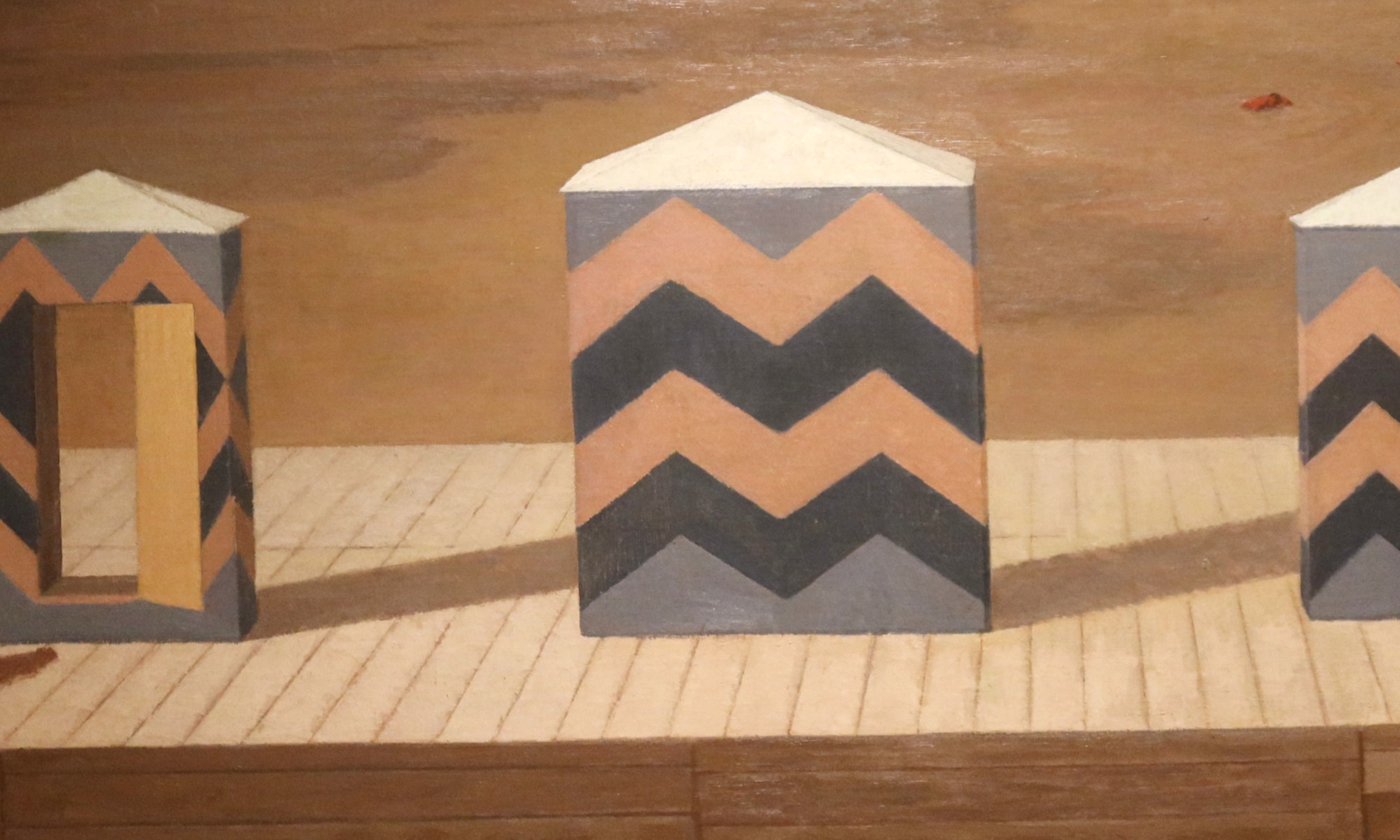
Il titolo di questa mostra, che è possibile vedere fino al 26 giugno 2026 a Palazzo reale a Milano, è significativo e lo si comprende molto bene man mano che ci si addentra nel percorso espositivo. Infatti parte dall’Avanguardia artistica nata a Ferrara nel 1917, ne espone i grandi capolavori dei pittori più importanti, e arriva a far percepire al visitatore come questo gruppo artistico ha influenzato nel tempo a venire tanti altri artisti, tendenze, campi (pittura, scultura, architettura, design, pubblicità) creando così tante “Metafisiche”.
La Metafisica nasce a Ferrara nel 1917 grazie a Giorgio de Chirico e Carlo Carrà. Letteralmente Metafisica significa “dopo le cose fisiche”: gli autori vogliono far percepire, con le loro opere, che c’è qualcosa che va oltre alla realtà fisica che vediamo, una sorta di mistero recondito, avvertito ma non risolto. Per questo motivo usano accostamenti insoliti di soggetti che sembrano non avere nulla in comune tra loro, oppure vengono decostentualizzati: in questo modo l’osservatore scopre nuovi punti di vista, significati, è come se guardasse quegli oggetti per la prima volta. Altre volte (specialmente De Chirico) usano prospettive volutamente erronee, ombre impossibili, creando così spazi che a prima vista potrebbero apparire realistici, ma la mente percepisce che non lo sono, e lì si crea l’indefinitezza di un pensiero che cerca di cogliere cosa c’è di strano. A ciò si aggiungono luoghi silenziosi, vuoti, la folla è altrove, non nei quadri metafisici.
Inutile chiedersi il significato ultimo dell’opera, perchè la volontà è quella di spiazzare l’osservatore, non di comunicagli significati occulti trasmessi con simbologie o accostamenti di soggetti. Il significato sta nel percepire il mistero sotteso a questa nostra vita terrena, e, in quanto mistero, resterà tale.
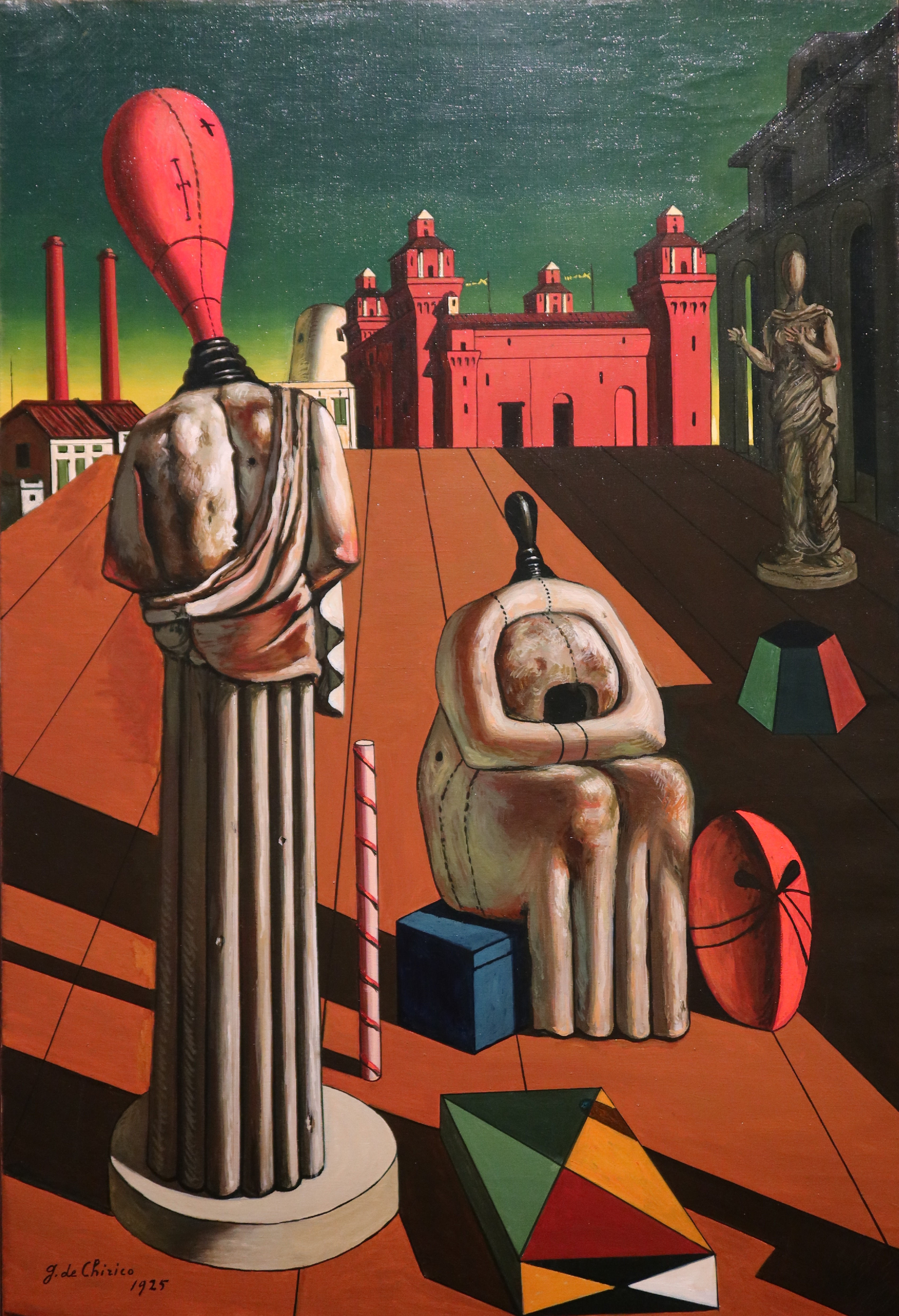
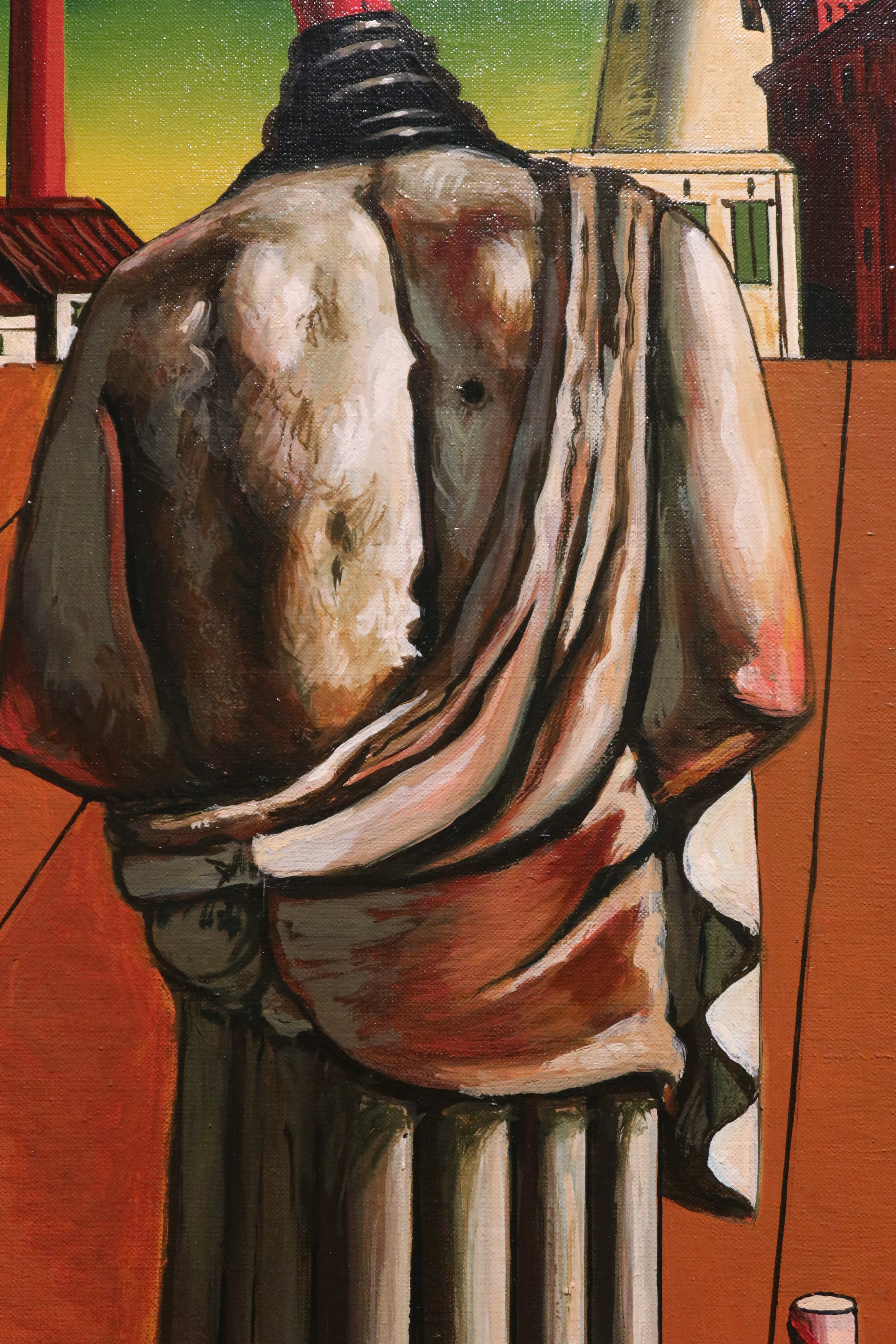
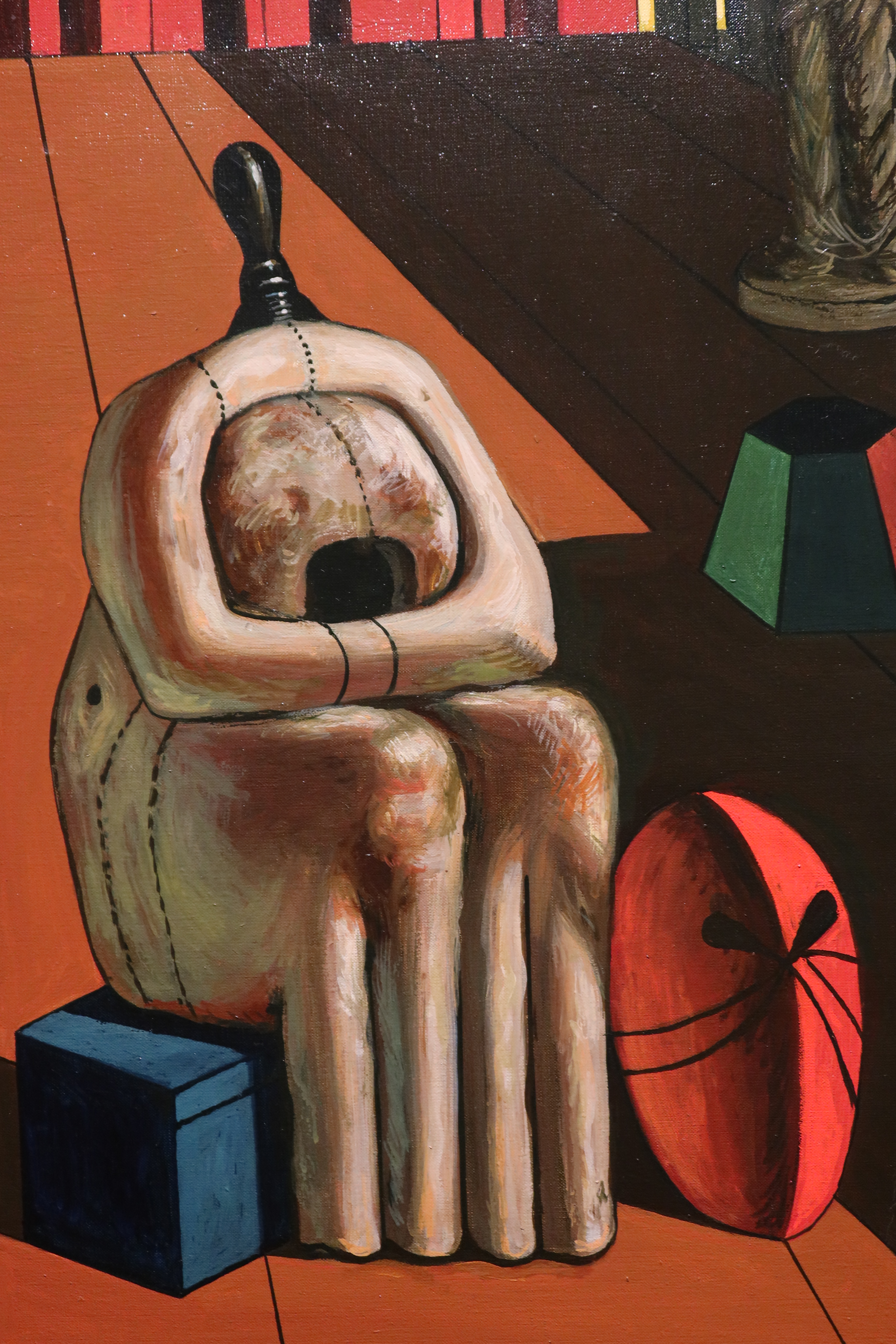
L’opera qui sopra è “Le muse inquitanti” di Giorgio de Chirico. Jean Cocteau disse di lui: “De Chirico è, in definitiva, un pittore religioso privo di fede. Il pittore del mistero laico. (…) De Chirico ci mostra la realtà spaesandola. E’ uno spaesaggista. (…) De Chirico dona all’oggetto il valore di una divinità”.
La mostra è ricchissima (circa 400 opere) ed è interessante vedere i diversi stili degli autori, come l’arte abbia anche influenzato la moda, e come poi abbia dato le basi per variazioni sul tema (ad esempio i lavori di Warhol), o influenzato la creazione di luoghi architettonici che hanno un genius logi prettamente metafisico, come quelli di Aldo Rossi o Gabriele Basilico, fino ad arrivare a campagne pubblicitarie come quella di Etro, dove il mix tra soggetti umani e teste di animali ricordano certe opere di Alberto Savinio.
The title of this exhibition, which can be seen until 26 June 2026 at the Palazzo Reale in Milan, is significant, and its meaning becomes very clear as you progress through the exhibition. Indeed, it begins with the artistic avant-garde movement that emerged in Ferrara in 1917, showcasing the great masterpieces of its most important painters, and goes on to give visitors a sense of how this artistic group went on to influence so many other artists, trends and fields (painting, sculpture, architecture, design, advertising), thereby creating so many ‘Metaphysical’ movements.
Metaphysical Art originated in Ferrara in 1917 thanks to Giorgio de Chirico and Carlo Carrà. Literally, ‘Metaphysical’ means ‘beyond physical things’: through their works, the artists seek to convey that there is something that goes beyond the physical reality we see – a sort of hidden mystery, sensed but not resolved. For this reason, they employ unusual juxtapositions of subjects that appear to have nothing in common, or which are taken out of context: in this way, the viewer discovers new perspectives and meanings; it is as if they were looking at those objects for the first time. At other times (especially in De Chirico’s work), they employ deliberately incorrect perspectives and impossible shadows, thereby creating spaces that might appear realistic at first glance, yet the mind senses that they are not; this gives rise to the vagueness of a thought striving to grasp what is strange about them. Added to this are silent, empty spaces; the crowd is elsewhere, not in metaphysical paintings.
It is pointless to wonder about the ultimate meaning of the work, because the intention is to unsettle the viewer, not to convey hidden meanings through symbolism or the juxtaposition of subjects. The meaning lies in perceiving the mystery underlying our earthly life, and, as a mystery, it will remain so.
The work shown above is ‘Le muse inquitanti’ (The Unsettling Muses) by Giorgio de Chirico. Jean Cocteau said of him: “De Chirico is, ultimately, a religious painter without faith. The painter of secular mystery. (…) De Chirico shows us reality by disorienting it. He is a ‘disorienter’. (…) De Chirico bestows upon the object the value of a deity”.
The exhibition is exceptionally rich (featuring around 400 works) and it is fascinating to see the different styles of the artists, how art has also influenced fashion, and how it subsequently laid the foundations for variations on the theme (for example, Warhol’s works), or influenced the creation of architectural spaces possessing a distinctly metaphysical genius loci, such as those by Aldo Rossi or Gabriele Basilico, right through to advertising campaigns such as Etro’s, where the blend of human figures and animal heads is reminiscent of certain works by Alberto Savinio.

