

La Casa Museo Ivan Bruschi si trova ad Arezzo, una bellissima cittadina ricca di tesori d’arte, uno dei tanti gioielli italiani. Malgrado ciò non è una meta estiva prediletta dai turisti, specialmente quelli stranieri, che si accalcano nelle solite città rinomate (Roma, Firenze, Venezia e Milano), forse anche perchè il nostro Ministero del Turismo non si prodiga abbastanza per far conoscere altri luoghi culturali oltre a quelli già famosi.
Ivan Bruschi nacque nel 1920. Studiò all’università dove frequentò Roberto Longhi; sicuramente quell’amicizia lo portò alla maturiazione di interessi estetici e culturali che segnarono le sue future scelte di vita. Bruschi, infatti, fu un appassionato di antiquariato, divenne un collezionista di opere d’eccezione, e aprì un negozio di antiquariato nella sua città; nel 1968 organizzò la prima Fiera dell’Antiquariato ad Arezzo, che in realtà era la prima fiera di questo genere in Italia, e che ancora oggi è un importante punto di riferimento mensile. Ma Ivan Bruschi fu in grado anche di restaurare l’antico Palazzo del Capitano del Popolo, dimora della sua famiglia, che durante la Seconda guerra mondiale era stato danneggiato. Tornò ad essere abitato e ne fece un luogo di incontri culturali ed eventi mondani. Prima di morire, nel 1996, Bruschi decise di lasciare tutta la sua collezione e il palazzo alla Fondazione Ivan Bruschi, così che potesse continuare un’attività culturale.
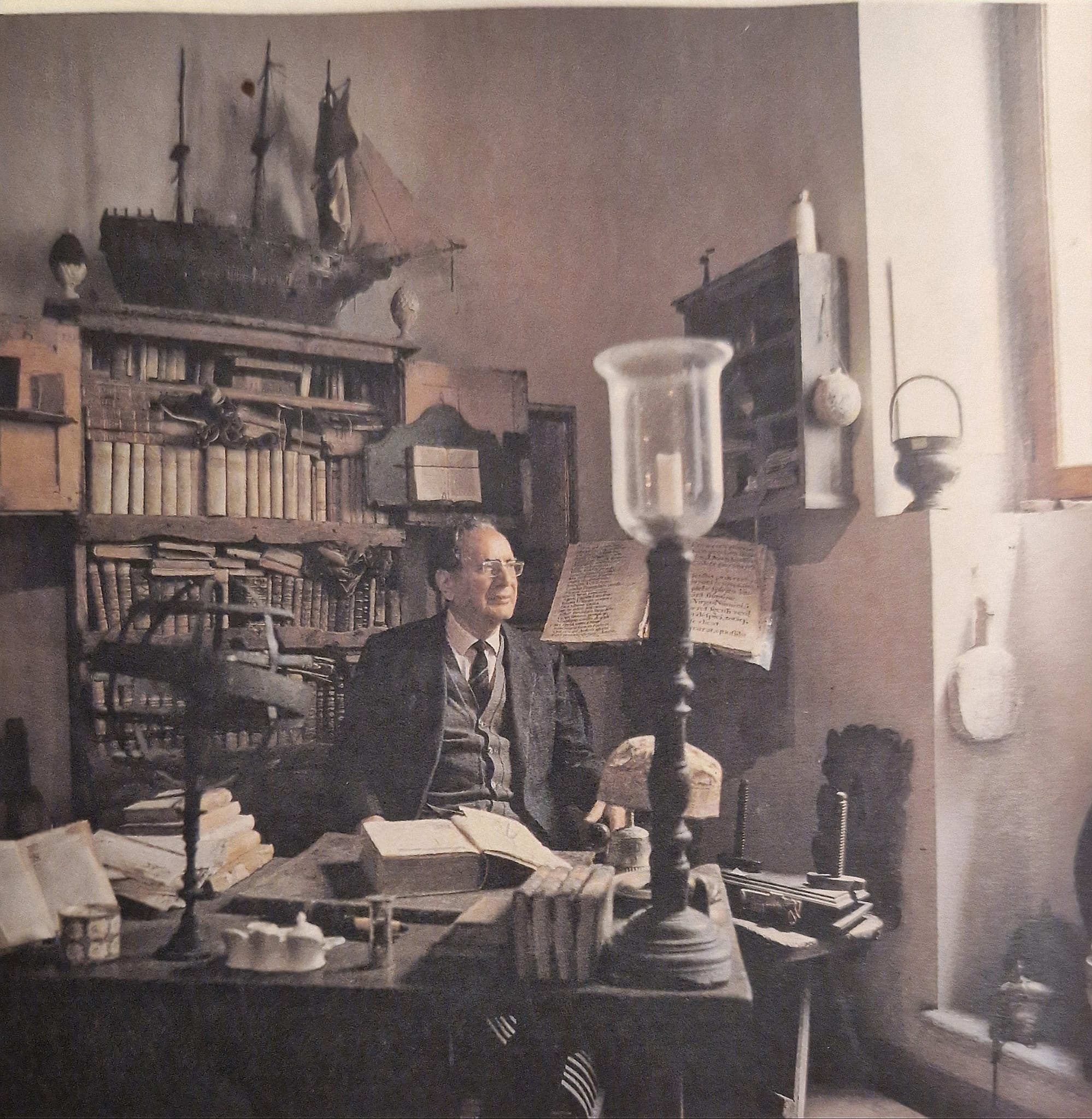
Visitare la sua casa museo è un tuffo in un passato: si parte con opere etrusche e greche del VI sec a.C. per arrivare alla prima metà del xx secolo, passando per l’arte antica, la pittura, la scultura, oggetti, armature, arte orientale… una miscellanea di bellezza che non stanca, ma incuriosisce. L’esposizione non è “museale”, con un orientamento didascalico cronologico, ma ha ancora tutto il sapore della collezione privata, che segue più un percorso emotivo e di gusto, e, proprio per questo, continua a sorprendere.
Ogni oggetto, ogni opera esposta ha un suo fascino, si capisce perchè è stata scelta, comprata. A volte sono piccoli oggetti d’arte antica che diventano ancora più interessanti perchè dialogano con altri piccoli oggetti dello stesso tipo, esposti nella stessa vetrina. In altri casi ci troviamo davanti a pezzi importanti, come il busto di Cristo in ceramica invetriata di Giovanni Della Robbia (figlio del più famoso Andrea della Robbia) o del bellissimo elmo lavorato a sbalzo. Ma le opere da citare sarebbero molte di più. Qui, ora, ci dedichiamo a due manufatti minori, ma di delicata bellezza popolare: due ex voto in ceramica smaltata.

Innanzitutto: cosa sono gli ex voto? Deriva dal latino ex voto suscepto, che significa “secondo la promessa fatta”. In pratica è un dono che il fedele fa alla divinità invocata in un momento di pericolo, di malattia, di difficoltà, in quanto la sua preghiera è stata esaudita, per grazia ricevuta (PRG). Gli ex-voto sono normalmente piccoli oggetti in argento (ad esempio un piede, se il fedele è stato guarito da una malattia ai piedi), dipinti, piccole sculture. Iniziarono ad essere diffusi nel ‘500, erano solitamente omaggi da parte di persone facoltose, poi divenne frequente anche nelle classi meno abbienti, e venivano donati normalmente ai Santuari. Le opere potevano essere realizzate da grandi artisti come dal fedele stesso, oggi sono considerati un importante patrimonio anche di arte popolare.
Spesso gli ex voto rappresentano una scena legata alla grazia ricevuta, come nel caso dei due bellissimi esempi presenti ad Arezzo. Sono due tavolette in ceramica dipinta, probabilmente tra la fine del ‘600 e l’inizio del ‘700, dalle dimensioni di 30 x 25 cm. Le figure, essenziali ma molto comunicative, sono tutte contornate da una linea scura, costante nello spessore, i colori sono vivaci e c’è una prevalenza di giallo e blu. Le scene sono bordate da una cornice dipinta e ad aggetto. La prima tavoletta rapprersenta l’aggressione di un uomo da parte di tre banditi armati di spade. L’uomo, inerme, alza le braccia al cielo per arrendersi e probabilmente in quel momento pregò la Madonna di salvargli al vita, cosa che effettivamente avvenne. Maria è rappresentata con il Bambino a sinistra della composizione, all’interno di un cerchio che si sovrappone alla chioma di un albero; appena sotto, in una sorta di targa, le tre lettere PRG (per grazia ricevuta). La seconda tavoletta raffigura una coppia che monta un cavallo (o un asino) e sta cadendo a terra insieme alla cavalcatura: la bestia è a gambe all’aria, le due persone hanno le braccia aperte e i loro cappelli sono già sul suolo. L’uomo e la donna devono aver passato davvero un brutto momento ma, probabilmente, ne sono usciti incolumi, sentendo così il bisogno di ringraziare Maria Vergine con un ex voto in quanto li aveva protetti. Anche questa volta è, infatti, rappresentata in un cerchio con il Bambino Gesù nella chioma di un albero, con sotto la targa PRG. Riguardo ai caratteri formali (linea, colori, composizione) valgono le stesse considerazioni della precedente tavoletta. Due raffigurazioni semplici ed eloquenti, immediate nella comprensione del significato, ma nello stesso tempo manifestano una significativa attenzione all’equilibrio compositivo (ad esempio nella seconda tavoletta i tre tendoni gialli controbilanciano visivamente la scena principale, che si svolge in basso) e la cura di certi dettagli (i cappelli, le pettinature, la foggia dei banditi). Sono la manifestazione di un mondo di devozione, dove dire “grazie” in modo significativo era importante.
Le due tavolette ricordano quelle del Santuario della Madonna del Bagno, in località Casalina, nel comune di Deruta (Umbria).

The Ivan Bruschi House Museum is located in Arezzo, a beautiful town rich in art treasures, one of Italy’s many jewels. Despite this, it is not a favourite summer destination for tourists, especially foreign ones, who flock to the usual renowned cities (Rome, Florence, Venice and Milan), perhaps also because our Ministry of Tourism does not do enough to make other cultural places known in addition to the already famous ones.
Ivan Bruschi was born in 1920. He studied at the University, where he met Roberto Longhi; this friendship certainly led to the maturation of aesthetic and cultural interests that marked his future life choices. In fact, Bruschi was a lover of antiques, becoming a collector of exceptional works and opening an antiques shop in his city; in 1968 he organised the first Antiques Fair in Arezzo, the first of its kind in Italy, which is still an important monthly reference point. Ivan Bruschi was also able to restore the ancient Palazzo del Capitano del Popolo, his family home, which had been damaged during the Second World War. It was inhabited again and became a venue for cultural and social events. Before his death in 1996, Bruschi decided to leave his entire collection and the palace to the Ivan Bruschi Foundation to continue its cultural activities.
A visit to his house-museum is like a journey back in time: from Etruscan and Greek works dating from the 6th century BC to the first half of the 20th century, through ancient art, painting, sculpture, objects, armour, oriental art… an eclectic mix of beauty that never tires but always fascinates. The exhibition is not “museum-like”, with a chronological, didactic orientation, but still has all the flavour of a private collection, which follows a path of emotion and taste and, precisely for this reason, continues to surprise.
Each object, each work on display has its own charm, and one understands why it was chosen, why it was bought. Sometimes they are small objects of ancient art, which become even more interesting because they are in dialogue with other small objects of the same type, displayed in the same showcase. In other cases we are confronted with important pieces, such as the glazed ceramic bust of Christ by Giovanni Della Robbia (son of the more famous Andrea della Robbia) or the beautiful embossed helmet. But there are many more works to mention. For now, we will focus on two smaller works, but of delicate popular beauty: two ex voto in glazed ceramic.
First of all, what is ex voto? It comes from the Latin ex voto suscepto, which means “according to the promise made”. In practice, it is a gift that the worshipper gives to the invoked deity in a moment of danger, sickness or difficulty, as a sign that his prayer has been answered by the grace received (PRG). Ex-votos are usually small silver objects (e.g. a foot, if the worshipper has been cured of a foot ailment), paintings, small sculptures. They became widespread in the 16th century, usually as gifts from the wealthy, but then also among the less affluent classes, and were usually donated to shrines. They could be made by great artists or by the faithful themselves, and today they are also considered an important heritage of popular art.
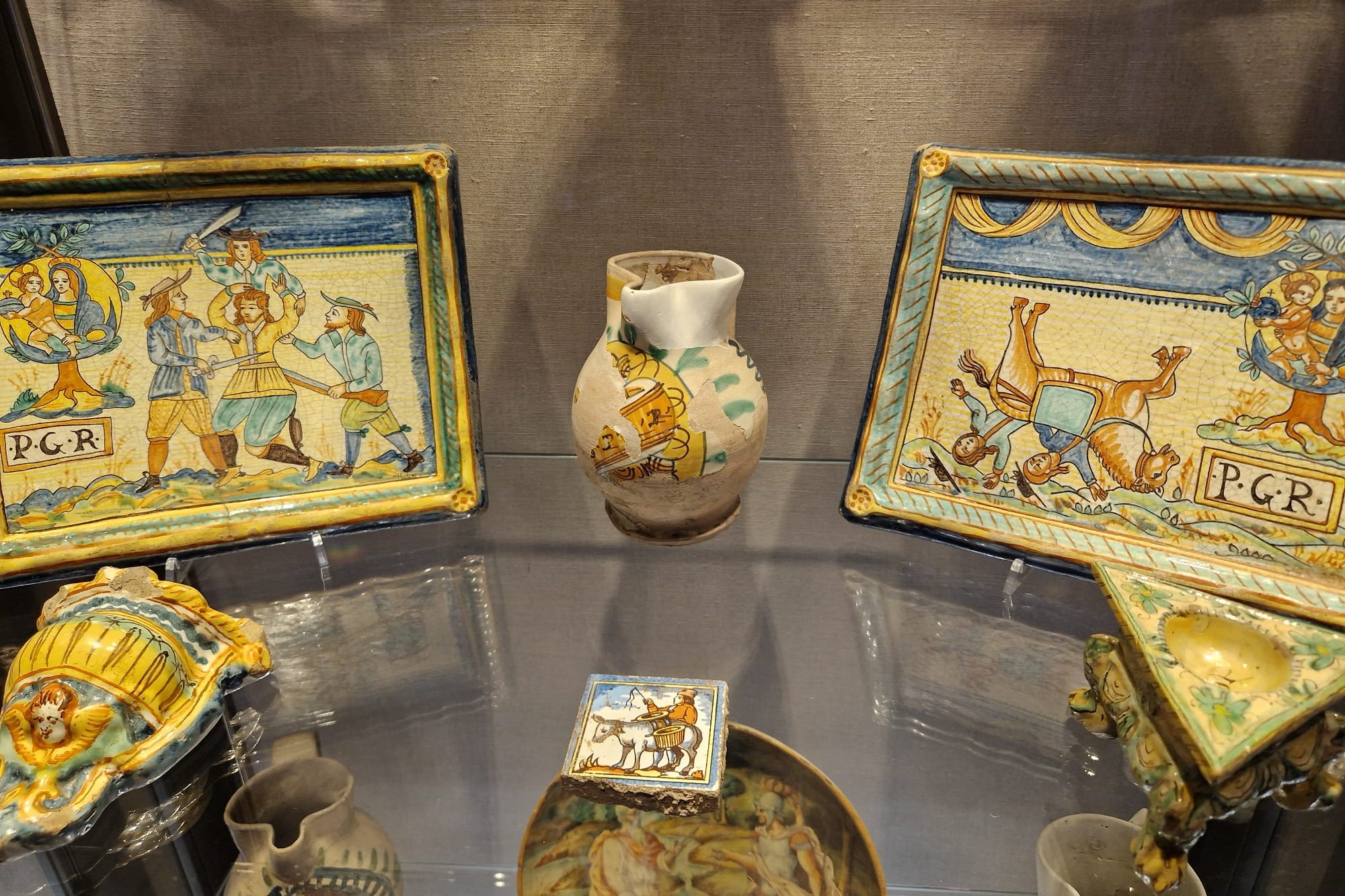
The ex-votos often depict a scene related to the grace received, as in the case of the two beautiful examples in Arezzo. They are two painted ceramic panels, probably from the late 17th or early 18th century, measuring 30 x 25 cm. The figures, essential but very communicative, are all surrounded by a dark line of constant thickness, the colours are bright, with a predominance of yellow and blue. The scenes are framed by a painted overhanging frame. The first panel shows a man being attacked by three bandits armed with swords. The defenceless man raises his arms to heaven in surrender, probably praying to the Virgin to save his life, which she did. Mary is depicted with the Child on the left of the composition, within a circle that overlaps the crown of a tree; just below, in a kind of plaque, are the three letters PRG (for grace received). The second panel depicts a couple riding a horse (or donkey) who fall to the ground with the animal: the animal is on its back, the two people have their arms outstretched and their hats are already on the ground. The man and the woman must have had a very bad time, but they probably came out unharmed and felt the need to thank the Virgin Mary with an ex voto for having protected them. Again, she is shown in a circle with the Child Jesus in the crown of a tree, with the PRG plaque underneath. The formal characteristics (line, colour, composition) are the same as in the previous panel. These two representations are simple and eloquent, immediate in their understanding of meaning, but at the same time show great attention to compositional balance (e.g. in the second panel, the three yellow curtains visually counterbalance the main scene taking place below) and to certain details (the hats, the hairstyles, the style of the bandits). They are the manifestation of a world of devotion, where saying “thank you” is a meaningful way of saying “thank you” in a meaningful way was important.
The two tablets are reminiscent of those in the Sanctuary of the Madonna del Bagno, at Casalina, in the municipality of Deruta (Umbria).
 Arte&Scrittura